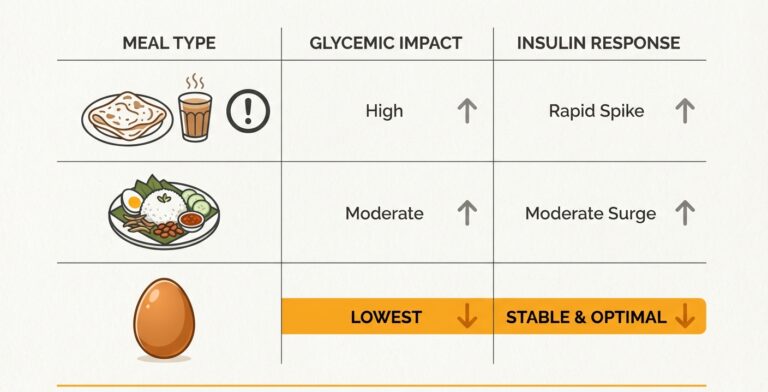
Are Eggs Good for Your Heart? Explaining HDL (Good) Cholesterol
For decades, the “egg-heart” debate has centered on a single word: Cholesterol. Because one large egg contains about 186mg of dietary cholesterol, many were told to limit their intake to avoid heart disease.
However, modern cardiology has shifted its focus. We now know that dietary cholesterol (what you eat) has a surprisingly small impact on blood cholesterol (what causes heart issues) for about 75% of the population. In fact, eggs are now recognized as a tool for improving your heart health by optimizing your “Good” cholesterol.

The Cholesterol Identity: HDL vs. LDL
To understand why eggs are heart-healthy, we have to look at the two primary “shuttles” that transport cholesterol through your bloodstream:
LDL (The “Bad” Delivery Truck): Low-Density Lipoprotein carries cholesterol to your tissues. When there is an excess of small, dense LDL, it can penetrate artery walls, leading to plaque buildup.
HDL (The “Good” Scavenger): High-Density Lipoprotein is the cardiovascular hero. Its job is to sweep through the bloodstream, collect excess cholesterol, and carry it back to the liver for disposal.
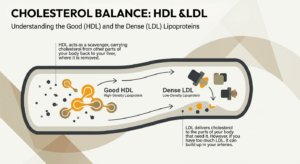
How Eggs Boost Your “Good” Cholesterol
Recent clinical trials have shown that eating 1–3 eggs per day consistently increases HDL levels in most people. But it isn’t just about the amount of HDL—it’s about the quality.
1. Making HDL More Efficient
New research in the Journal of Nutrition suggests that the phospholipids found in egg yolks make HDL particles larger and more effective at their “scavenging” job.
2. Changing the Shape of LDL
While eggs can slightly raise LDL in some people, they tend to change the LDL particles from “small and dense” (which are dangerous) to “large and fluffy.” Large LDL particles are much less likely to stick to your artery walls and cause blockages.
3. The Power of Antioxidants
Egg yolks are packed with Lutein and Zeaxanthin. These aren’t just for eye health; they are powerful anti-inflammatories that prevent cholesterol from “oxidizing.” Oxidized cholesterol is what actually triggers the inflammation that leads to heart attacks.

| The Old Myth | The Scientific Reality (2024-2026) |
|---|---|
| Eggs clog your arteries. | Eggs increase “Good” HDL, which clears arteries. |
| You should only eat egg whites. | Most heart-healthy nutrients (Omega-3s, Lutein) are in the yolk. |
| Eggs cause heart disease. | Large-scale studies show no link between eggs and heart disease in healthy people. |

The EGGHEY Heart-Health Standard
When it comes to your cardiovascular system, not all eggs are created equal. Heart-health guidelines emphasize the importance of stable, high-quality fats.
At EGGHEY, our hens are raised on a specialized, natural diet that produces yolks rich in heart-protective nutrients. Because we dispatch our eggs within 12 hours of being laid, the delicate fats and antioxidants inside the shell remain completely stable and unoxidized. By bypassing the long warehouse storage of commercial supply chains, we ensure those nutrients arrive at your kitchen at peak bio-availability.
When you crack an EGGHEY egg, you aren’t just eating breakfast—you are providing your cardiovascular system with the high-quality fuel it needs to keep your “good scavengers” working flawlessly.

We are team egghey. We started this brand to share the incredible taste of truly fresh eggs from our family’s farm in Perak. We hope you enjoy them as much as we do!