The Mucin Connection: How Egg Whites Protect Your Gut Lining and Microbiome
When dealing with digestive issues like bloating, food sensitivities, or “leaky gut,” most people immediately turn to probiotics—swallowing expensive capsules of bacteria or drinking liters of kombucha. However, modern gastroenterology has realized that throwing bacteria into a damaged gut is like planting seeds in toxic soil.
Before you can heal your microbiome, you have to rebuild the physical environment where those bacteria live: the intestinal mucous layer.
To do this, science is pointing to a highly specific, therapeutic compound found in the thick, gel-like portion of a fresh egg white. It is called Ovomucin, and it acts as both a structural patch for your gut lining and a premium food source for your healthiest bacteria. Here is the deep science of the mucin connection, and why the physical thickness of your egg white dictates its healing power.
1. The Physical Barrier: Rebuilding the Gut Wall
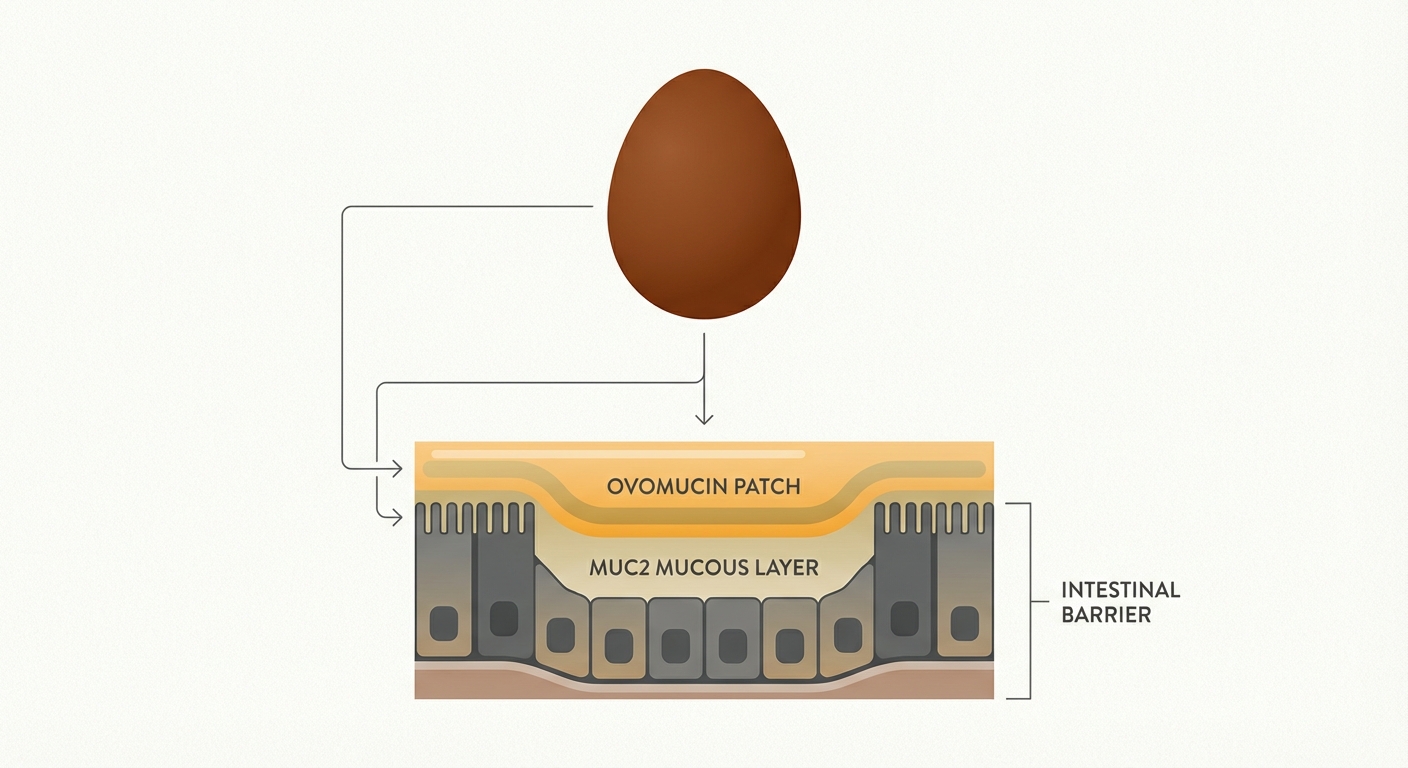
Your intestinal tract is lined with a single layer of epithelial cells. To protect these vulnerable cells from stomach acid, toxins, and pathogenic bacteria, your body constantly secretes a thick, gel-like barrier called the mucous layer, which is primarily made of a protein called mucin (specifically MUC2).
When this mucous layer thins out due to stress, a poor diet, or aging, toxins “leak” through the intestinal wall into the bloodstream, triggering systemic inflammation and food sensitivities.
The Ovomucin Rescue:
The egg white is nature’s ultimate biological shield, designed to protect the yolk from bacterial infection. It does this using a glycoprotein called ovomucin. Biologically, avian ovomucin is incredibly similar (homologous) to human intestinal mucin. Clinical studies show that dietary ovomucin actively helps reinforce the structural integrity of your own mucosal barrier, physically patching the “leaks” and reducing intestinal inflammation.
2. The Prebiotic Power: Feeding the Right Bacteria
Ovomucin does not just act as a physical patch; it is also a highly specialized prebiotic. Because of its complex, heavily glycosylated structure (sugar molecules attached to the protein), intact ovomucin resists early digestion. It passes into the colon, where it serves as a premium carbon food source for highly specific, barrier-healing bacteria.
Akkermansia muciniphila: This is one of the most important bacteria in the human gut, famous for preventing metabolic disease. Akkermansia thrives on mucin. Feeding it the sialylated glycans from a fresh egg white triggers massive, healthy bacterial proliferation.
Short-Chain Fatty Acids (SCFAs): As beneficial bacteria ferment the ovomucin, they release SCFAs. These fatty acids are the direct fuel source that your intestinal cells use to regenerate and heal.
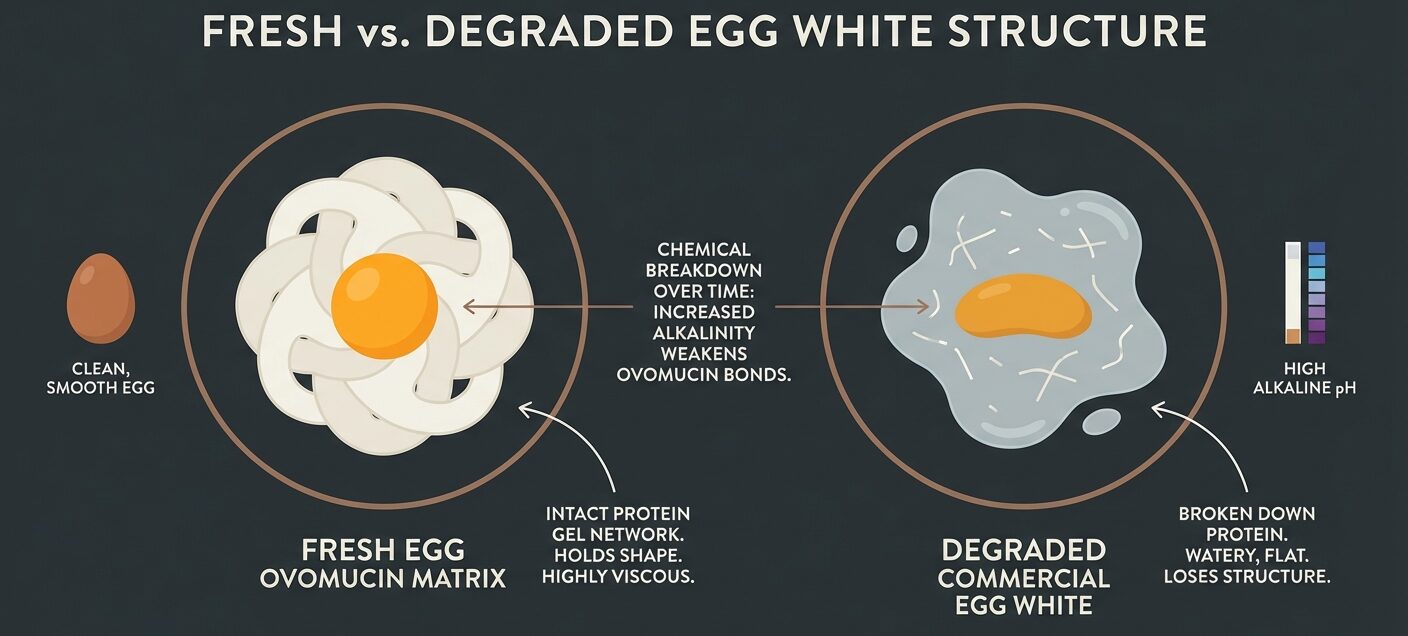
The Degradation Danger: The “Watery White” Problem
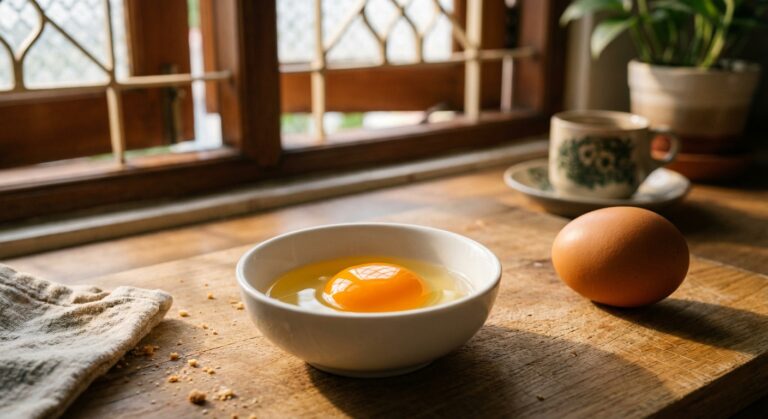
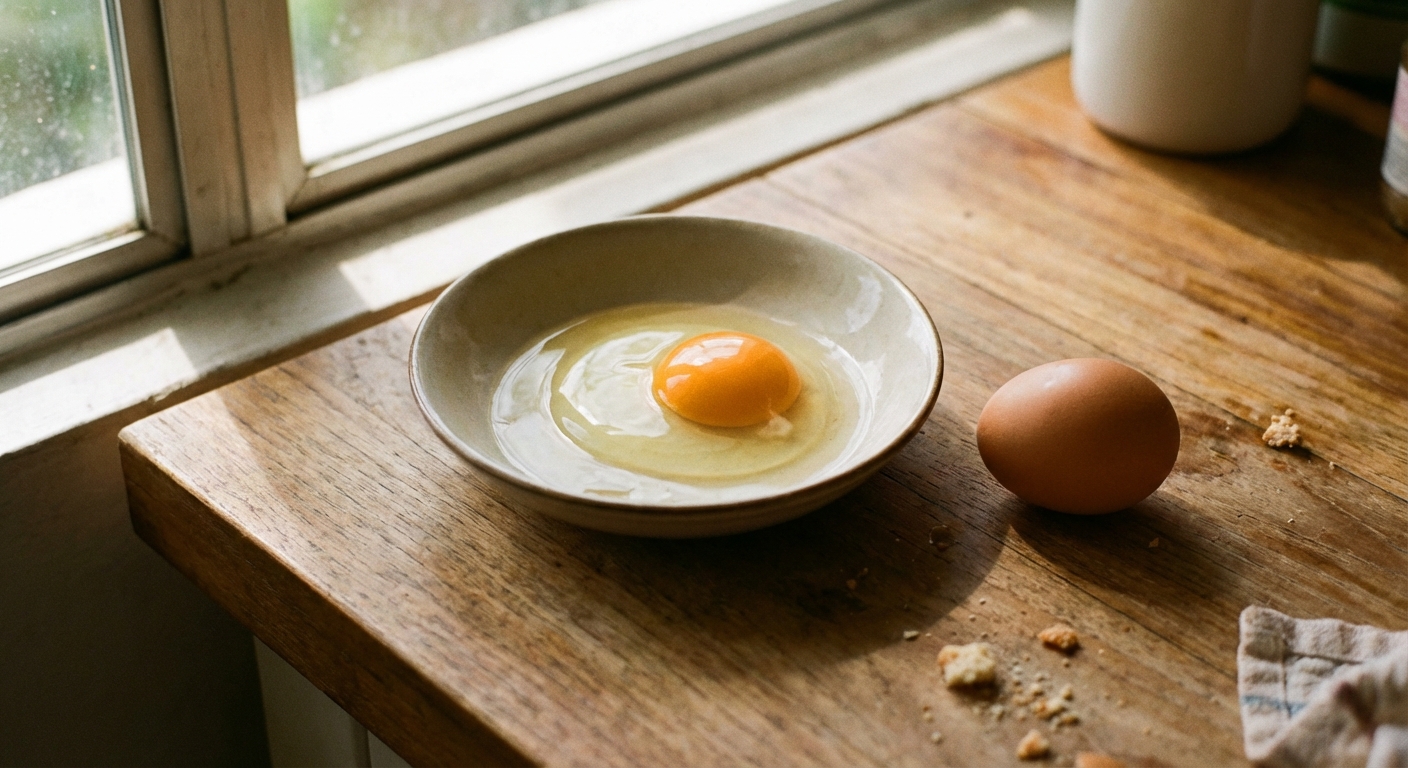
Using an egg to heal your gut comes with one massive biological caveat: The ovomucin matrix must be structurally intact to survive your stomach acid. You can actually see the health of the ovomucin with your naked eye. In a freshly laid egg, the ovomucin forms a tight, cloudy, high-viscosity gel. This intact structural matrix allows the glycoproteins to survive the harsh acids of the upper digestive tract and successfully reach your colon.
However, when a supermarket egg sits on a shelf for 14 to 21 days, a chemical collapse occurs: carbon dioxide escapes through the shell, causing the egg’s internal pH to spike into a highly alkaline state, which acts as a chemical solvent, uncoupling the ovomucin bonds and liquefying the white.

The EGGHEY Digestive Protocol
If you are eating eggs for digestive healing, freshness is a medical necessity. This is why EGGHEY dispatches eggs via courier within 12 hours of being laid. When your EGGHEY carton arrives, the egg white is still remarkably thick, cloudy, and viscous. By checking the Laid Date on the carton, you can be confident that you are delivering a pristine, biologically active prebiotic shield directly to your microbiome.
| Digestive Metric | EGGHEY Egg (2–3 Days Old) | Commercial Egg (14–21 Days Old) |
|---|---|---|
| Egg White Viscosity | Thick, cloudy gel (Intact Ovomucin) | Thin, watery puddle (Degraded Ovomucin) |
| Mucosal Support | High (Reinforces the intestinal barrier) | Low (Structural bonds dissolved) |
| Prebiotic Function | Actively feeds Akkermansia | Degraded (Digested too early in GI tract) |
| Inflammatory Impact | Anti-inflammatory (Generates SCFAs) | Variable |

We are team egghey. We started this brand to share the incredible taste of truly fresh eggs from our family’s farm in Perak. We hope you enjoy them as much as we do!