Why Eggs Are Better Than Carrots for Your Eye Health
When we think of foods that are good for our eyes, most of us immediately picture carrots. But there is a secret ingredient sitting right in your fridge that might actually be far superior for protecting your vision: the humble egg.
If you want to keep your eyes sharp, reduce eye strain from screens, and protect your vision as you age, eating eggs regularly is one of the best habits you can build. Here is the breakdown of the powerful nutrients hiding inside every egg yolk.

The Dynamic Duo: Lutein and Zeaxanthin
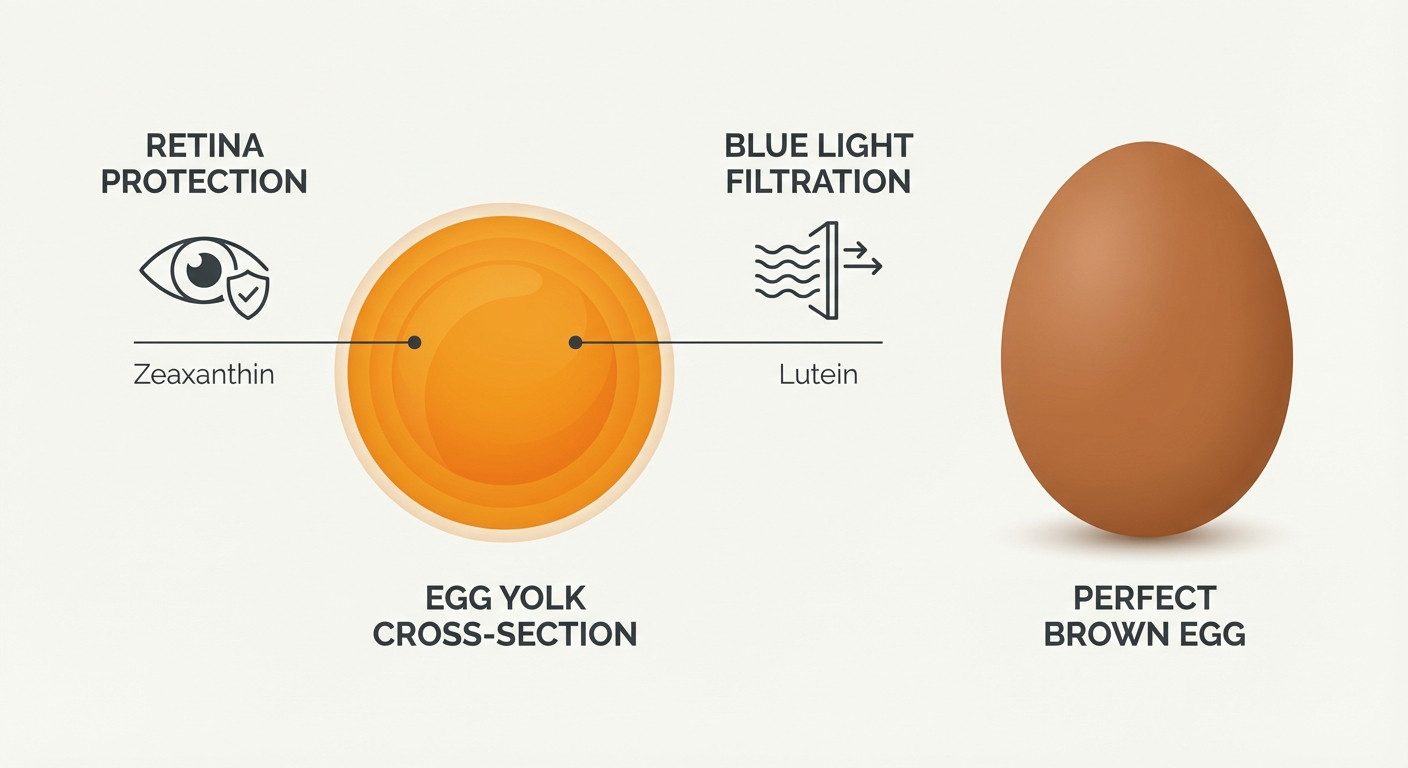
The real magic of an egg lies in its yellow-orange yolk. That color comes from natural compounds called carotenoids. Two specific carotenoids found abundantly in eggs are lutein and zeaxanthin.
Think of these two nutrients as your eyes’ “internal sunglasses.”
The Blue Light Filter
Lutein and zeaxanthin physically build up in the macula (the center of your retina). They actively filter out harmful blue light from phones and computers before it can damage your sensitive eye tissue.
Protecting Against Aging
These antioxidants neutralize free radicals. Studies show that a diet rich in these two nutrients significantly lowers the risk of developing cataracts and Age-Related Macular Degeneration (AMD).
Why Eggs Beat Spinach and Carrots
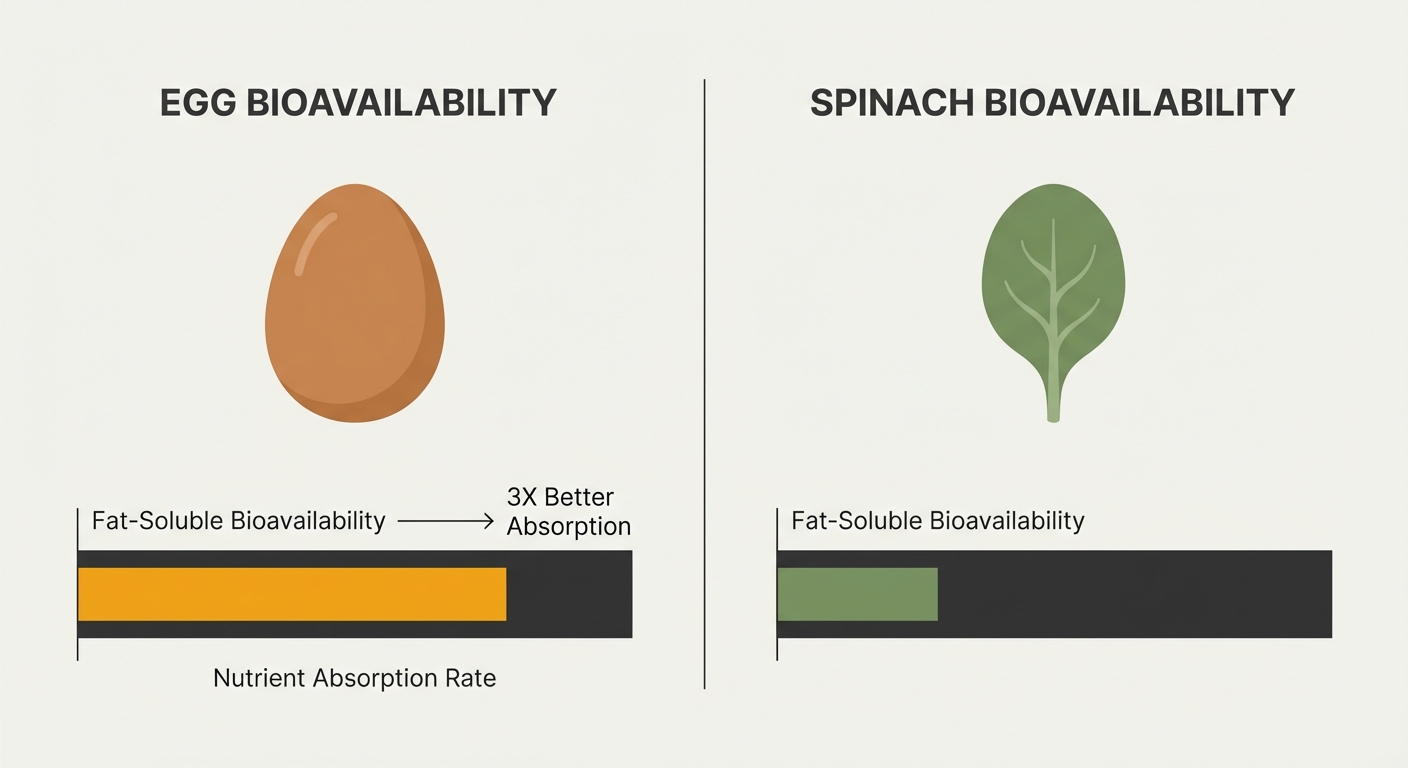
You might be wondering, “Can’t I just get lutein from spinach?” You can, but eggs have a massive natural advantage: Bioavailability.
The Fat Factor: Lutein and zeaxanthin are fat-soluble. Your body requires healthy fats to “unlock” these nutrients and absorb them into your bloodstream.
The Perfect Package: Spinach has high lutein but almost zero fat, so your body struggles to absorb it all. An egg yolk naturally contains exactly the right amount of healthy fats needed for absorption. Because of this, the lutein from an egg is absorbed by your body up to 3 times better than the lutein from vegetables.
The Supporting Cast: Zinc and Vitamin A
Vitamin A: Crucial for protecting the cornea (the clear surface of your eye). A lack of Vitamin A is the leading cause of night blindness.
Zinc: This mineral helps transport Vitamin A from your liver to your retina, where it produces the protective pigment called melanin. Zinc also helps your eyes adapt to the dark.
| Nutrient | Benefit | Found in… |
|---|---|---|
| Lutein | Filters Blue Light; Protects Retina | Egg Yolks, Spinach |
| Zeaxanthin | Prevents Macular Degeneration | Egg Yolks, Corn |
| Vitamin A | Protects Cornea; Night Vision | Egg Yolks, Carrots |
| Zinc | Transports Vitamin A to the Eye | Egg Yolks, Oysters |

The EGGHEY Advantage for Your Vision
Because the nutrient levels in an egg depend entirely on what the hen eats, the quality of your eggs matters immensely for your vision.
At EGGHEY, our hens are raised on a natural, highly nutritious diet packed with genuine plant extracts. We strictly refuse to use artificial dyes or synthetic colors. This means when you eat an EGGHEY egg, you are getting a highly bioavailable, pure dose of natural lutein and zeaxanthin to protect your family’s vision—exactly the way nature intended.
References:
[1] Stringham, J. M., & Hammond, B. R. (2008). Optometry and Vision Science.
[2] Seddon, J. M., et al. (1994). JAMA.
[3] Chung, H. Y., et al. (2004). The Journal of Nutrition.
[4] Sommer, A. (2008). The Journal of Nutrition.
[5] Newsome, D. A., et al. (1988). Archives of Ophthalmology.

We are team egghey. We started this brand to share the incredible taste of truly fresh eggs from our family’s farm in Perak. We hope you enjoy them as much as we do!