Egg Whites vs. Whole Eggs: Which is Better for Your Weight Loss Goals?
For decades, the standard “fitness rulebook” advised tossing the egg yolks and sticking exclusively to the whites to achieve a lean physique. The logic was strictly mathematical: the white is almost pure protein, while the yolk carries the fats and calories.
However, modern nutritional biology shows that sustainable weight loss is not merely a math equation of calories in versus calories out. It is governed by metabolic efficiency, hormone-driven satiety, and muscle preservation. When comparing egg whites to whole eggs, the physiological winner might surprise you.

The Calorie-Restricted View (Egg Whites)
If the sole objective is extreme, short-term calorie restriction, egg whites possess a mechanical advantage:
The Profile
One large egg white contains approximately 17 calories and 3.5g of protein.
Gastric Volume
You can consume a high volume of egg whites for very few calories, which physically stretches the stomach. However, because they lack fats, they digest rapidly, causing a sharp insulin response and a quick return of hunger.
The Metabolic Advantage (Whole Eggs)
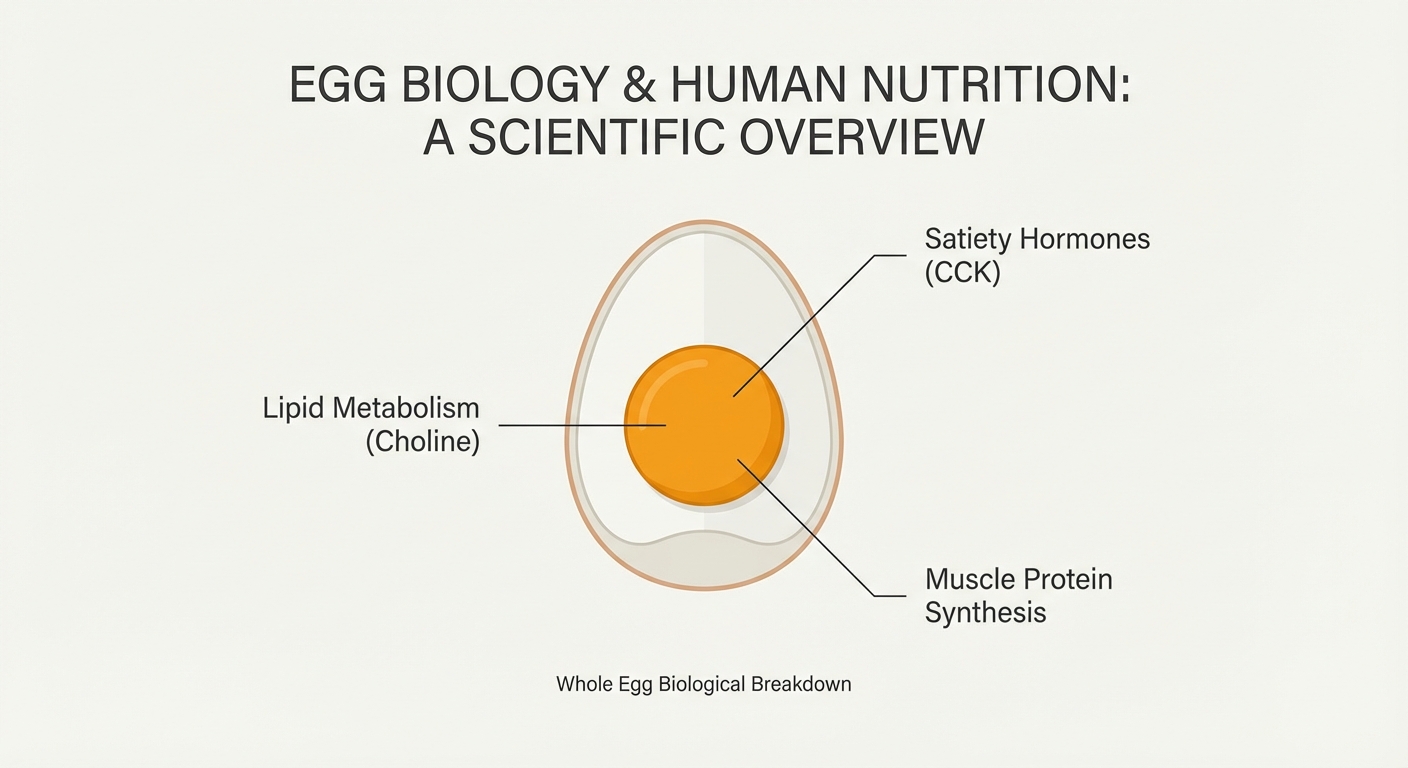
While egg whites offer low-calorie protein, whole eggs provide superior nutritional density and metabolic support. The lipids (fats) and micronutrients within the yolk actively assist your body in utilizing protein and regulating the hormones that control your appetite.
1. Superior Muscle Protein Synthesis
Preserving and building lean muscle is critical for maintaining a high resting metabolic rate. Landmark research demonstrates that consuming whole eggs after resistance training stimulates muscle protein synthesis significantly more than consuming the exact same amount of protein from egg whites alone. The natural food matrix of the yolk helps the body utilize amino acids more efficiently.
2. The Satiety Factor (Hormonal Fullness)
The primary biological hurdle in weight loss is managing hunger. The fats and proteins in a whole egg slow down gastric emptying and trigger the release of satiety hormones in the gut, such as Cholecystokinin (CCK). Foundational research on the “Satiety Index” proves that consuming whole eggs leads to greater fullness and a natural reduction in calorie intake in the hours following the meal.
3. Essential Nutrients for Lipid Metabolism
The yolk contains 100% of the egg’s fat-soluble vitamins (A, D, E, K) and highly bioavailable choline. Choline is biologically essential for the liver to transport and utilize fats for energy.
Objective Comparison
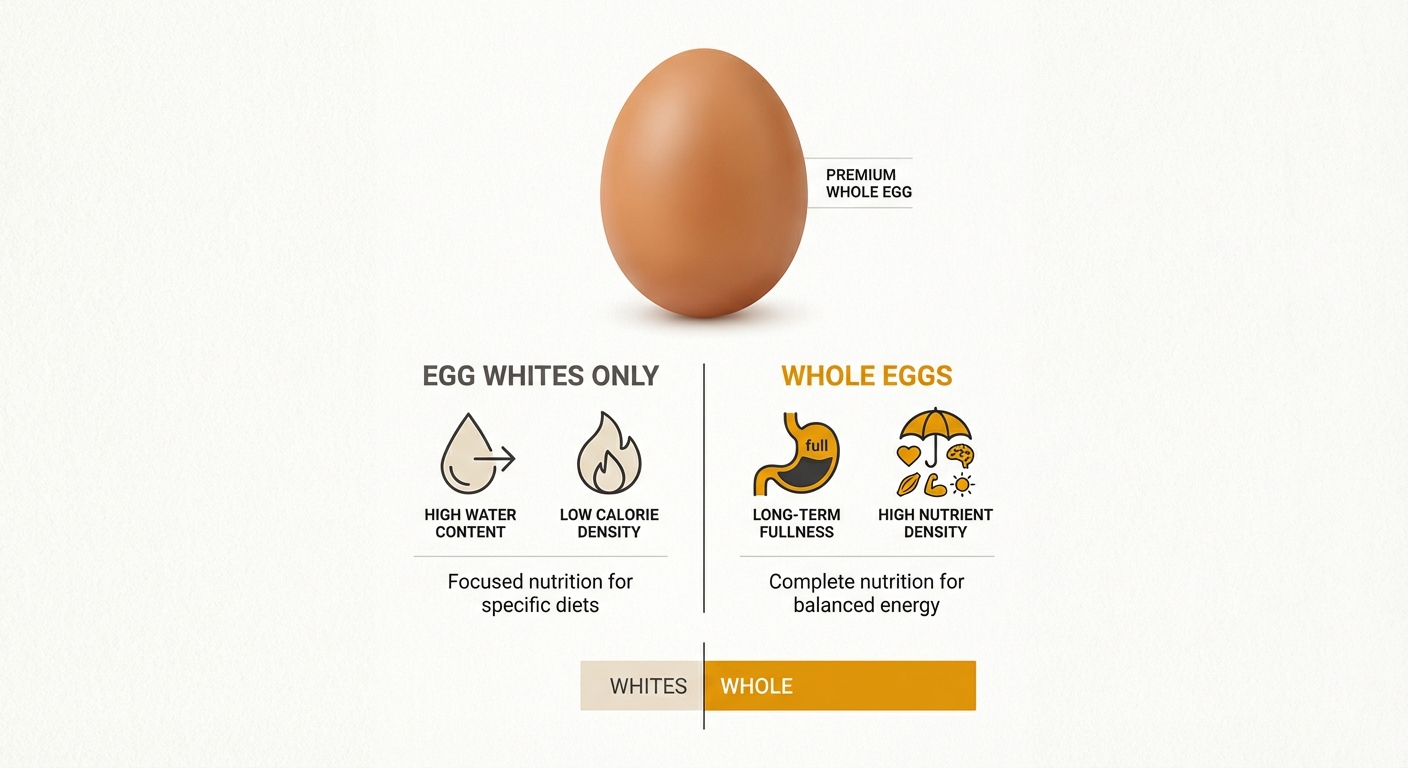
| Feature | Egg Whites Only | Whole EGGHEY Eggs |
|---|---|---|
| Calories (per large egg) | ~17 kcal | ~70 – 78 kcal |
| Protein Utilization | Moderate | Optimal (Lipids aid in synthesis) |
| Satiety (Fullness) | Short-term (Rapid digestion) | Long-term (Hormone-driven) |
| Nutrient Density | Low (Mostly water and albumin) | High (Vitamins A, D, B12, Choline) |
| Best Used For | Strict, short-term calorie cutting | Sustainable metabolic health & muscle retention |

The EGGHEY Strategy for Weight Loss
For decades, outdated diet culture told us to throw away the yolk to save calories. Modern metabolic science proves the exact opposite: to lose weight sustainably, you need the whole egg.
The pristine, unoxidized fats in a fresh EGGHEY yolk trigger the release of powerful satiety hormones that keep you full for hours, effectively shutting down the cravings that lead to weight gain. Because our eggs are dispatched within 12 hours of being laid, you are fueling your body with a clean, stable energy source that keeps your blood sugar flat and your metabolism in a natural fat-burning state.
Do not fear the yolk—let the complete, un-degraded biology of a fresh whole egg do the heavy lifting for your weight loss goals.

About The Author
We are team egghey. We started this brand to share the incredible taste of truly fresh eggs from our family’s farm in Perak. We hope you enjoy them as much as we do!