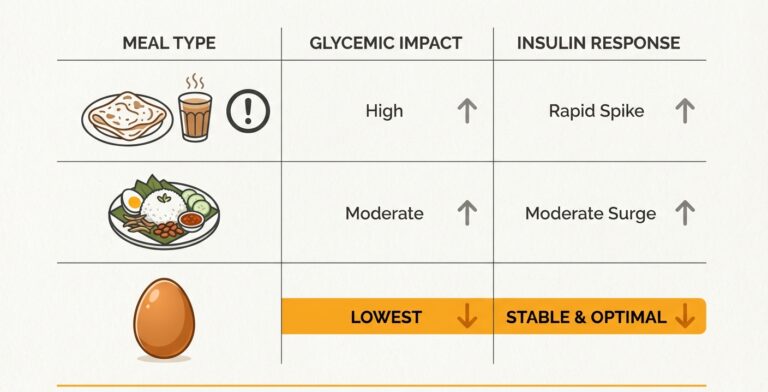
The Longevity Diet: Egg Peptides, Biotin, and Cellular Anti-Aging for Skin
The global skincare industry has convinced millions that the secret to youthful, elastic skin comes in a plastic tub of expensive, powdered collagen. However, modern nutritional biochemistry reveals a glaring flaw in this trend: when you drink processed collagen, your body does not directly transport it to your face. Your digestive system breaks it down into individual amino acids before deciding where to use them.
If you want to actively rebuild Type 1 collagen—the structural protein responsible for firm, wrinkle-resistant skin—you do not need to consume chemically extracted powders. You simply need to provide your cells with the highest quality raw materials.
Here is the science of how the specific amino acid sequences and unoxidized nutrients in a fresh egg act as the ultimate anti-aging protocol for your skin.
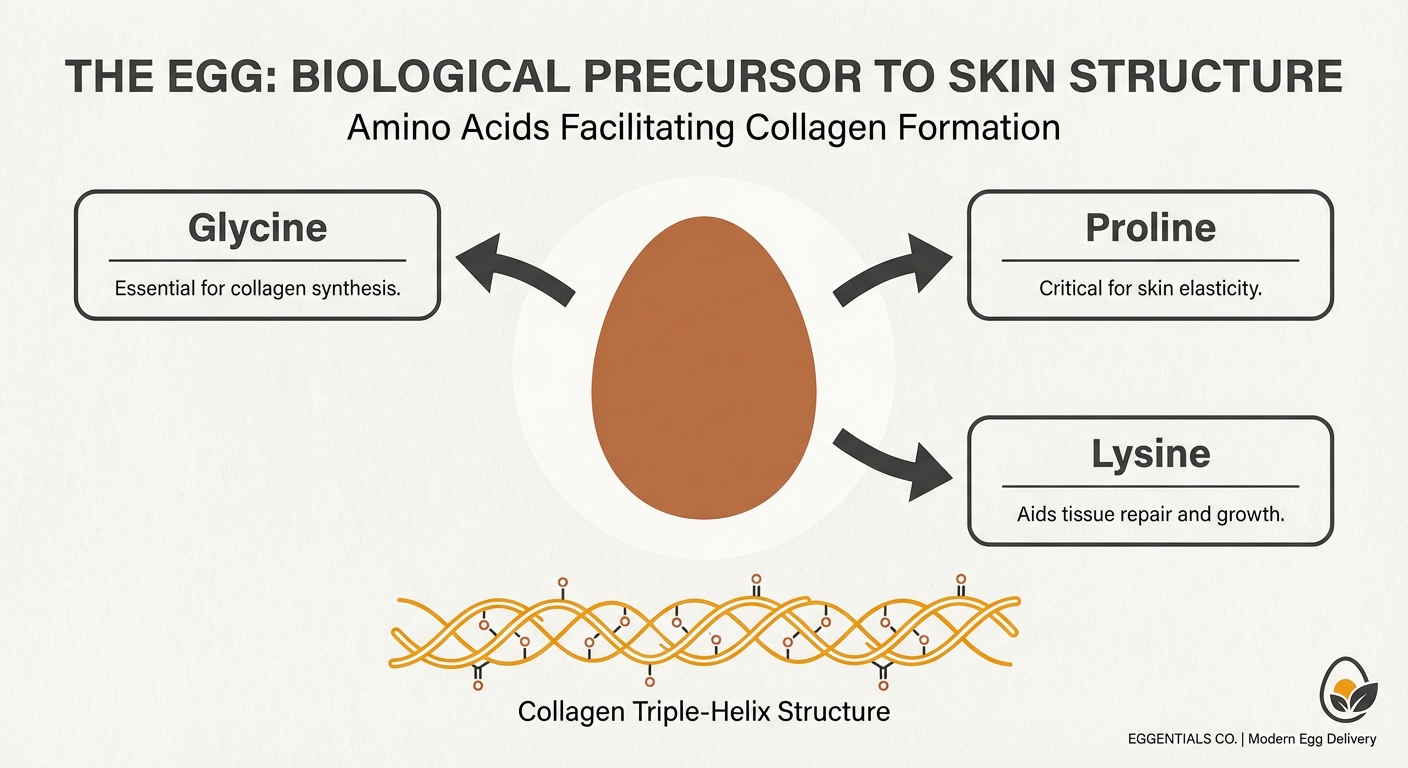
The Building Blocks: Amino Acids and the Collagen Triple Helix
When we talk about the “protein” in an egg helping your skin, we are actually talking about amino acids.
Eggs are famous in the scientific community because they are a “complete protein.” They naturally contain every essential amino acid your body needs, packaged in a highly bioavailable biological ratio. Your skin cells (called fibroblasts) rely on this complete protein to build fresh collagen from scratch.
To construct a strong, youthful collagen fiber, your body desperately needs three specific amino acids found abundantly in eggs:
Glycine
The primary structural foundation. Roughly 33% of all the collagen in your skin is made of pure Glycine.
Proline
This amino acid gives the collagen fibers their stable, tightly twisted shape, ensuring your skin stays firm and resists sagging.
Lysine
Acting as the biological “glue,” Lysine cross-links the collagen fibers together, giving your skin its bouncy, youthful elasticity.

The Biotin Catalyst: Fueling the Fibroblasts
While the egg white provides the building blocks, amino acids cannot build skin without a catalyst.
The egg yolk is one of nature’s most concentrated sources of Biotin (Vitamin B7) and dietary Sulfur. Sulfur is critical for reinforcing the chemical bonds of your skin’s structural fibers. Meanwhile, Biotin fuels the cellular metabolism required by the fibroblasts to physically push these new collagen structures into the dermal layer.
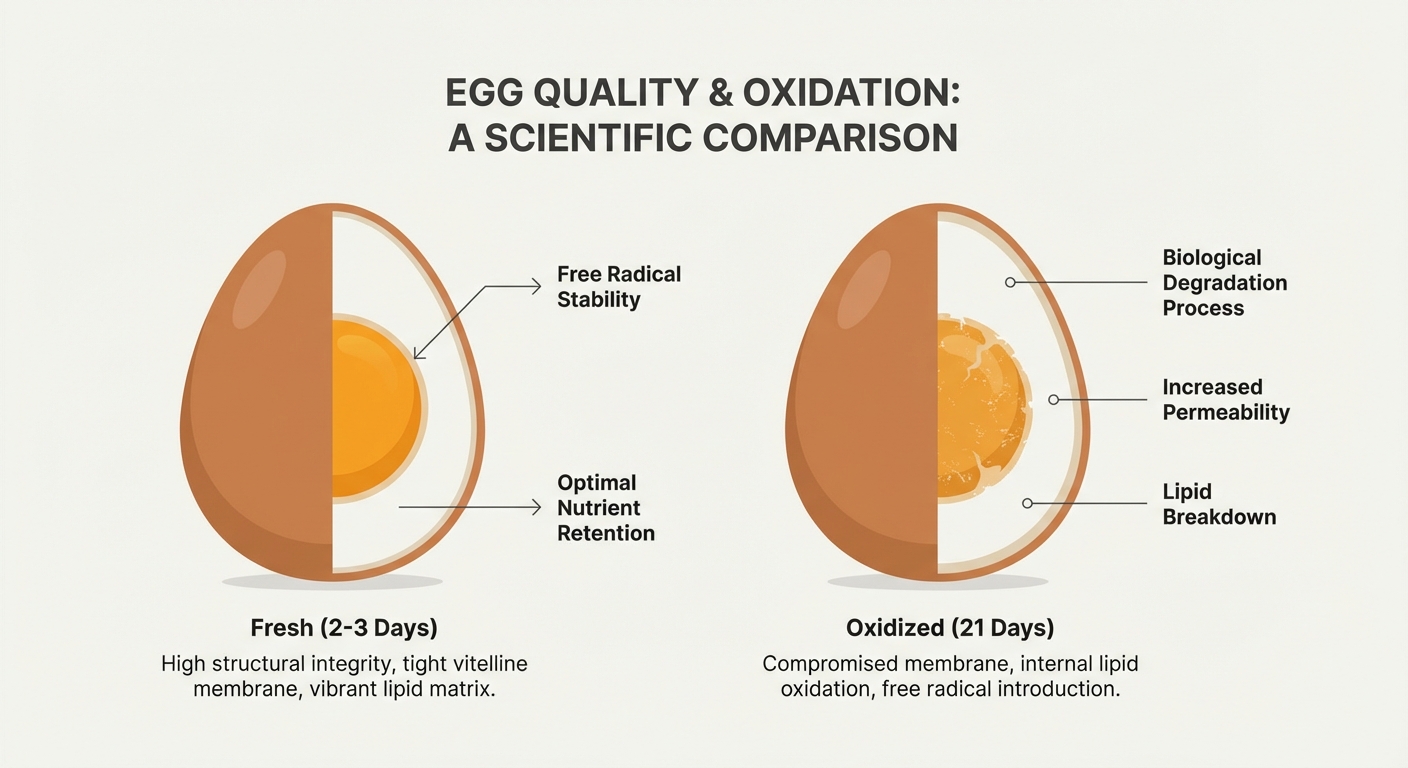
The Oxidation Problem: Why Aging Eggs Sabotage Your Skin
Using food for skincare only works if the nutrients are chemically intact. The biochemical power of an egg is entirely dependent on its freshness.
When a standard commercial egg sits in the hot, humid supply chain for two to three weeks, oxygen slowly penetrates the porous shell, triggering a process called Lipid Oxidation. The yolk’s protective lipid matrix, which holds the Biotin and fat-soluble vitamins, begins to degrade and oxidize.
Consuming oxidized fats introduces free radicals into your bloodstream. Instead of fighting wrinkles, these free radicals trigger oxidative stress, which actively breaks down your existing skin collagen. Eating a three-week-old, oxidized supermarket egg introduces inflammatory compounds that can neutralize the anti-aging benefits you are trying to achieve.
The EGGHEY Skincare Protocol
Achieving glowing, resilient skin from the inside out requires biological purity.
This is exactly why EGGHEY intercepts the aging process. By packing and dispatching your eggs via courier within 12 hours of being laid, we bypass the warehousing system entirely. When your delivery arrives, the eggs are just 2 to 3 days old.
At this precise stage, the egg’s biological shield is fully intact. The essential amino acids in the egg white are structurally potent, and the Biotin in the yolk is suspended in pristine, completely unoxidized lipids. By checking the Laid Date on your carton, you are ensuring your fibroblasts receive the most active, unadulterated collagen precursors available in nature.

The Anti-Aging Comparison
| Skincare Metric | EGGHEY Egg (2–3 Days Old) | Commercial Egg (14–21 Days Old) | Processed Collagen Powder |
|---|---|---|---|
| Nutrient State | Pristine, unoxidized lipids | Oxidizing fats | Highly processed / Heat-altered |
| Biotin & Sulfur | Highly bioavailable | Degraded via extended storage | Often missing entirely |
| Cellular Impact | Provides clean raw materials for collagen | Provides basic energy | Variable absorption |
| Inflammation Risk | Zero (Anti-inflammatory) | High (Oxidized lipids cause stress) | Low to Medium |

About The Author
We are team egghey. We started this brand to share the incredible taste of truly fresh eggs from our family’s farm in Perak. We hope you enjoy them as much as we do!