
Health & Nutrition
Anatomy of Egg: What’s Really Inside Your Egg?
By Xinn • July 14, 2025
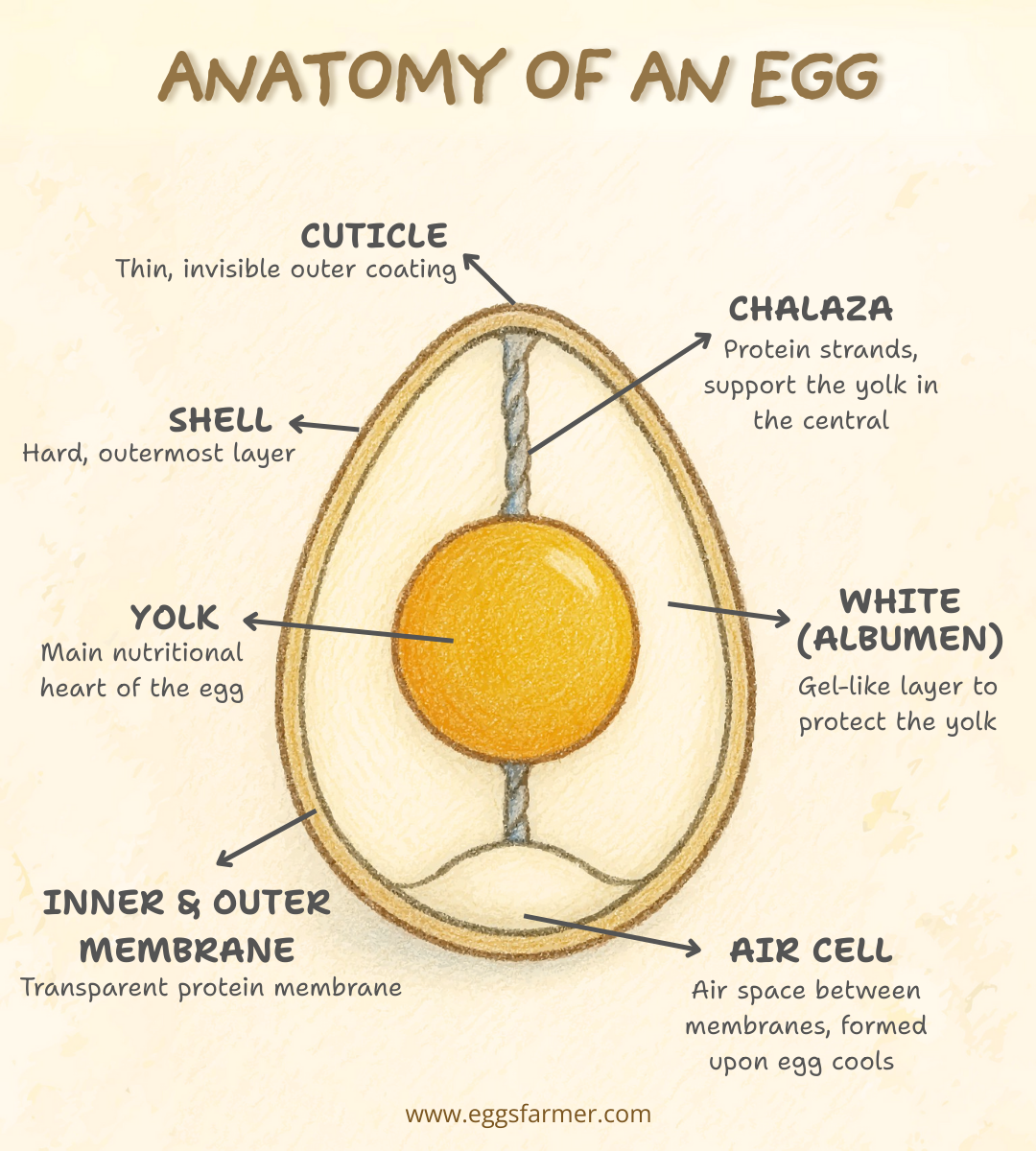
Uncracking the Mystery: What’s Really Inside Your Egg?
Ever wondered what makes an egg so amazing, beyond just being a breakfast staple? It’s a marvel of natural engineering, packed with protective layers and vital nutrients. Let’s take a closer look at the intricate anatomy of an egg!
Cuticle/Bloom
A very thin, almost invisible, natural protective coating on the exterior of the shell. It’s present on freshly laid eggs.
• Function:
◦ Sealing Pores: Helps to seal the shell’s pores, effectively reducing moisture loss and preventing the entry of bacteria and dust.
◦ Natural Defense: This protective layer contains natural antimicrobial compounds, forming a chemical shield against bacteria. By significantly reducing the risk of pathogens entering the egg, it plays a vital role in maintaining the egg’s internal quality and purity.
Shell
The hard, outermost layer of the egg, primarily composed of calcium carbonate. Its color (white or brown) depends on the hen’s breed.
• Function:
◦ Physical Protection: Provides the primary rigid barrier protecting the delicate internal contents from physical damage.
◦ Gas Exchange: Contains thousands of microscopic pores that allow essential gases (like oxygen) to enter and waste gases (like carbon dioxide) and water vapor to exit, and contributes to changes in freshness over time as gases and moisture are exchanged.
Inner & Outer Shell Membranes
Two tough, transparent, fibrous protein membranes located just inside the eggshell. They lie close together, separating only at the wide end of the egg to form the air cell.
• Function:
◦ Bacterial Barrier: Together, they serve as a critical physical defense system against microbial penetration, providing multiple protective layers to safeguard the internal, edible parts of the egg.
◦ Structural Support: They also contribute to the overall structural integrity of the egg, providing a flexible but strong lining to the shell.
Air Cell
An air pocket that forms between the inner and outer shell membranes, usually located at the egg’s large (blunt) end. It develops as the egg cools and its contents contract after laying.
• Function:
◦ Freshness Indicator: This air cell gradually expands as the egg ages because moisture and carbon dioxide are lost through the shell’s pores, making its size a reliable indicator of the egg’s freshness (a smaller air cell signifies a fresher egg).
White Albumen
The clear, viscous liquid that surrounds the yolk, making up about two-thirds of the egg’s total liquid weight. It consists of alternating layers of thick and thin albumen.
• Function:
◦ Primary Protein Source: A rich source of high-quality protein (e.g., ovalbumin, ovotransferrin), which is highly nutritious for human consumption and easily digestible.
◦ Shock Absorber: The more viscous thick albumen acts as a protective cushion, safeguarding the delicate yolk from physical damage during handling.
◦ Antimicrobial Properties: Contains various proteins (like lysozyme and ovotransferrin) with natural antimicrobial activities that inhibit bacterial growth, thus extending the egg’s natural shelf life.
◦ Low-Calorie Protein: As it contains virtually no fat or cholesterol, it’s an excellent choice for a low-calorie, high-protein diet.
Chalaza
Two opaque, rope-like strands of dense protein fibers (mucin) extending from opposite sides of the yolk into the thick albumen.
• Function:
◦ Yolk Anchoring: Act as natural anchors or “springs,” suspending the yolk securely in the center of the egg white, preventing it from migrating or touching the shell.
◦ Yolk Protection: By holding the yolk in place, they contribute to its overall protection from mechanical damage.
◦ Freshness Indicator: Prominent and intact chalazae are a sign of a very fresh egg; they become less distinct as the egg ages.
Yolk
The central, yellow to orange spherical part of the egg, accounting for about one-third of its weight. Its color is influenced by the hen’s diet.
• Function:
◦ Primary Nutrient Reservoir: This is the most nutrient-dense part of the egg, packed with fats (monounsaturated and polyunsaturated), fat-soluble vitamins (A, D, E, K), essential fatty acids, choline, and a significant portion of its protein and minerals (iron, phosphorus, zinc, selenium, lutein, zeaxanthin).
◦ Brain & Eye Health: A significant source of Choline, which is a vital nutrient for brain health, memory, and nerve function. It also contains the antioxidants lutein and zeaxanthin, which are crucial for maintaining healthy vision and protecting against age-related eye conditions.
About The Author
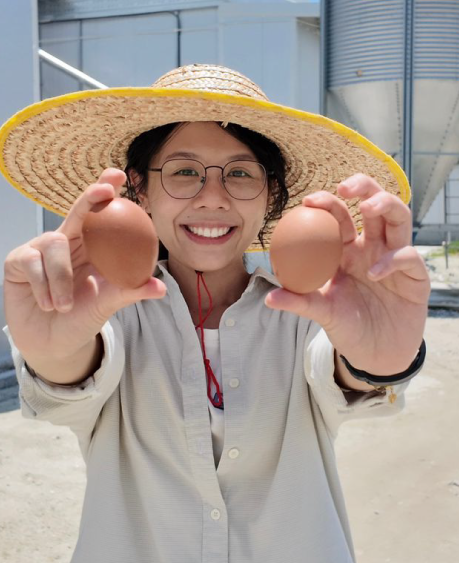
I’m Shin, the co-founder of egghey. I started this brand to share the incredible taste of truly fresh eggs from my family’s farm in Perak. I hope you enjoy them as much as we do!